My hobbys and things
Sporty stuff
In general
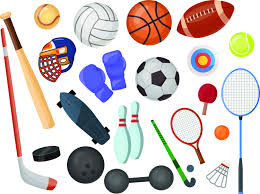
I play some sports. The sports are Football, Wresling, and Track. My favorite of all of them is Track. Why? Because I am very fast. At least I think so. My other sports i play are just as fun/hard. I'm a pretty good football player, but i'm great at wresling. At least I would say so. (Learn things).
I think sports are really fun. Sports are very essential for every human life which keeps them fit and fine and physical strength. It has great importance in each stage of life. It also improves the personality of people. Sports keep our all organs alert and our hearts become stronger by regularly playing some kind of sports. sports has always given priority from old ages and nowadays it has become more fascinating. Due to the physical activity blood pressure also remains healthy, and blood vessels remain clean. Sugar level also reduces and cholesterol comes down by daily activity. Different people have different interests in sports but the action is the same in all sports. Sports are becoming big channels to make more capital/money day by day and the number of people is also increasing. By playing sports even at a young age you can also be better and free from some diseases. By playing sports lung function also improves and becomes healthy because more oxygen is supplied. Sports also improves bone strength even in old age.
Track
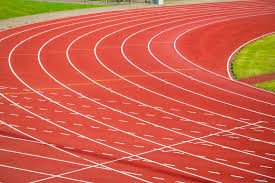
Track and field is a sport that includes many different kinds of athletic contests that are based on running, jumping, and throwing. The name used in North America is derived from where the sport takes place, a running track and a grass field for the throwing and some of the jumping events. Track and field is categorized under the umbrella sport of athletics, which also includes road running, cross country running and race walking. Though the sense of "athletics" as a broader sport is not used in American English, outside of the United States the term athletics can either be used to mean just its track and field component or the entirety of the sport (adding road racing and cross country) based on context.
The foot racing events, which include sprints, middle- and long-distance events, race walking, and hurdling, are won by the athlete who completes it in the least time. The jumping and throwing events are won by those who achieve the greatest distance or height. Regular jumping events include long jump, triple jump, high jump, and pole vault, while the most common throwing events are shot put, javelin, discus, and hammer. There are also "combined events" or "multi events", such as the pentathlon consisting of five events, heptathlon consisting of seven events, and decathlon consisting of ten events. In these, athletes participate in a combination of track and field events. Most track and field events are individual sports with a single victor; the most prominent team events are relay races, which typically feature teams of four. Events are almost exclusively divided by gender, although both the men's and women's competitions are usually held at the same venue. One exception are mixed relays, in which two men and two women make up the four-person team. If a race has too many people to run all at once, preliminary heats will be run to narrow down the field of participants. Track and field is one of the oldest sports. In ancient times, it was an event held in conjunction with festivals and sports meets such as the Ancient Olympic Games in Greece. In modern times, the two most prestigious international track and field competitions are the athletics competition at the Olympic Games and the World Athletics Championships. World Athletics, formerly known as the International Association of Athletics Federations, is the international governing body for the sport of athletics. Records are kept of the best performances in specific events, at world, continental, and national levels. However, if athletes are deemed to have violated the event's rules or regulations, they are disqualified from the competition and their marks are erased.
You can check out my personal stats right here
Wresling
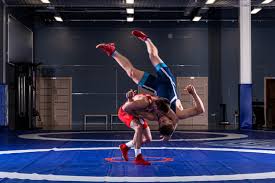
Wrestling is a martial art, combat sport, and form of entertainment that involves grappling with an opponent and striving to obtain a position of advantage through different throws or techniques, within a given ruleset. Wrestling involves different grappling-type techniques, such as clinch fighting, throws and takedowns, joint locks, pins, and other grappling holds. Many different wrestling techniques have been incorporated into martial arts, combat sports, and military systems. Wrestling comes in different forms, the most popular being professional wrestling, which is a form of athletic theatre. Other legitimate competitive forms include Greco-Roman, freestyle, judo, sambo, folkstyle, catch, shoot, luta livre, submission, sumo, pehlwani, shuai jiao, and more. Wrestling first appeared in the ancient Olympic Games as an event during the 18th Olympiad in 708 BC. There are a wide range of styles with varying rules, with both traditional historic and modern styles.
Wrestling represents one of the oldest forms of combat sport. The origins of wrestling go back around 15,000 to 17,000 years ago through cave drawings in France. Babylonian and Egyptian reliefs show wrestlers using various holds known in the present-day sport. Literary references to wrestling occur as early as the Old Testament and the ancient Indian Vedas[specify]. In the Book of Genesis, the Patriarch Jacob is said to have wrestled with God or an angel. The Iliad, in which Homer recounts the Trojan War of the 13th or 12th century BC, also contains mentions of wrestling. Indian epics Ramayana and Mahabharata contain references to martial arts including wrestling. The Yellow Emperor fought the rebel Chi You using Shuai Jiao at the Battle of Zhoulu. This early style of combat was first called jiao di (butting with horns).In Ancient Greece wrestling occupied a prominent place in legend, literature, and philosophy. Wrestling competition, brutal in many aspects, served as the focal sport of the ancient Olympic Games. Ancient Romans borrowed heavily from Greek wrestling, but eliminated much of its brutality through implementing different rules. Wrestling is referenced throughout both Ancient Greek and Roman literature. Many philosophers and leaders practiced wrestling and/or referenced the sport frequently in their works, most notably Plato, Socrates, Aristotle, Xenophon, Epictetus, Seneca, Plutarch, and Marcus Aurelius. Dicaearchus wrote that Plato wrestled at the Isthmian games. Many of Plato's dialogues are set in wrestling schools. Ancient Greek lyric poet Pindar wrote victory odes, grouped into four books named after the Olympian, Pythian, Isthmian, and Nemean Games – Panhellenic festivals held respectively at Olympia, Delphi, Corinth, and Nemea. These odes were composed to honor the men and youths who had enjoyed victories in wrestling, boxing, pankration and other athletic contests.
learn more about wresling here
Hover over this text to see it slide and skew!
Video Games
Fortnite
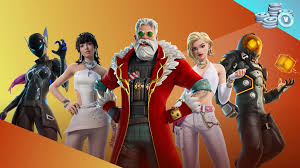
Fortnite is a 2017 online video game and game platform developed and released by Epic Games. It is available in seven distinct game mode versions that otherwise share the same general gameplay and game engine: Fortnite Battle Royale, a battle royale game in which up to 100 players fight to be the last person standing; Fortnite: Save the World, a cooperative hybrid tower defense-shooter and survival game in which up to four players fight off zombie-like creatures and defend objects with traps and fortifications they can build; Fortnite Creative, in which players are given complete freedom to create worlds and battle arenas; Lego Fortnite, an open world game collection divided between survival game Lego Fortnite Odyssey and social game Lego Fortnite Brick Life; Rocket Racing, a racing game; Fortnite Festival, a rhythm game; and Fortnite Ballistic, a tactical first-person shooter currently in early access. All game modes except Save the World are free-to-play.
Save the World and Battle Royale were released in 2017 as early access titles, while Creative was released on December 6, 2018. While the Save the World and Creative versions have been successful for Epic Games, Fortnite Battle Royale in particular became an overwhelming success and a cultural phenomenon, drawing more than 125 million players in less than a year, earning hundreds of millions of dollars per month. Fortnite as a whole generated $9 billion in gross revenue up until December 2019, and it has been listed among the greatest games of all time. I personally love Fornite because its fun.
click here to play the game.
Clash Royale
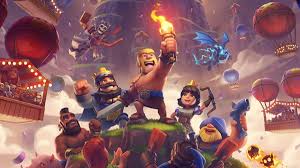
Clash Royale is a real-time strategy mobile game incorporating elements from collectible card games, multiplayer online battle arenas and tower defense. Players compete in head-to-head battles to destroy opposing towers while defending their own. The primary game mode features 1v1 matches in which players earn trophies and progress through a series of themed arenas, unlocking new cards and gameplay features as they advance. Upon reaching a sufficiently high trophy count, players gain access to ranked play, which is divided into seven leagues: Master I, Master II, Master III, Champion, Grand Champion, Royal Champion, and Ultimate Champion.Battles take place in an arena where each player has three towers—one King Tower and two Princess Towers. The arena is divided into two halves by a river, with bridges on the left and right forming two lanes where players can focus their attacks. Each player uses a deck of eight cards, four of which are available in their hand at any given time.Cards are deployed onto the arena by spending elixir, a resource that generates passively over time up to a maximum of 10.Cards may represent troops, buildings, or spells. When deployed, troops typically advance towards enemy towers; some target opponent's troops on the way while others charge directly towards the tower. Princess Towers automatically attack enemy units that enter their side of the river. The King Tower becomes active after a Princess Tower is destroyed or once the King Tower has taken damage, and will then assist in defending against enemy troops. Buildings and spells can be placed to defend territory or cause effects like damaging enemy units and structures. Most troops and buildings can only be deployed by players onto their own side of the arena, corresponding to the lower half of the screen, while spells can be used anywhere on the arena. If a player destroys an opponent's tower, they gain access to part of the opponent’s side of the arena beyond the river.
Battles last up to three minutes in normal time, with elixir generation doubling during the final minute. A player wins by destroying the opponent's King Tower or by destroying more towers than their opponent by the end of normal time. If both players have destroyed the same number of towers, the match enters overtime, where the first player to destroy a tower wins. If no tower is destroyed within two minutes of overtime, a tiebreaker is applied in which the player with the tower on the lowest remaining health loses. During the final minute of overtime, elixir generation is tripled.Deck-building is an important strategic element in Clash Royale. Between battles, players can select any eight cards from their collection to form their deck. Players can collect cards from chests earned through gameplay, purchase them from the in-game shop, or join a clan and request them from clan members. Cards can be upgraded using in-game currency, which increases their effectiveness and contributes to the player's "King Level"—the level of their account which also affects tower strength. Card levels are an important consideration when building a deck, as higher-level cards are stronger; however, players must also account for the synergy between cards in their collection. In-battle strategy varies depending on the deck, but generally consists of efficient elixir management, precise card placements and timings, and tracking an opponent's elixir and cards.
click here to play on computer!
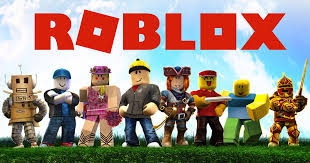
Roblox
Roblox is an online game platform and game creation system built around user-generated content and games, officially referred to as "experiences". Games can be created by any user through the platform's game engine, Roblox Studio, and then shared to and played by other players. The games featured on Roblox vary in genre, from role-playing games to ones centered around escaping prison, among others. The platform is made to appeal to a family-friendly audience, and has been described as a massively multiplayer online game (MMO).
While Roblox is free-to-play, it features a virtual currency known as "Robux" that can be purchased with real-world money. Robux can be used to purchase virtual items that the player can use on their virtual character (or "avatar") on the platform, or access experiences that require payment. As with games, avatar items on Roblox are mainly user-generated, though most items on the platform were made by Roblox themselves for most of the platform's history. Through the platform's "Developer Exchange" program, creators on the platform are able to exchange their earned Robux to real-world money. In addition, Roblox features a monthly service called "Roblox Premium", with its subscribers gaining access to more features on the platform and a monthly stipend of Robux.
yet again click here to play the game
Music
Alternative
Alternative rock (also known as alternative music, alt-rock or simply alternative) is a category of rock music that evolved from the independent music underground of the 1970s. Alternative rock acts achieved mainstream success in the 1990s with the likes of the grunge subgenre in the United States, and the Britpop and shoegaze subgenres in the United Kingdom and Ireland. During this period, many record labels were looking for "alternatives", as many corporate rock, hard rock, and glam metal acts from the 1980s were beginning to grow stale throughout the music industry. The emergence of Generation X as a cultural force in the 1990s also contributed greatly to the rise of alternative music. "Alternative" refers to the genre's distinction from mainstream or commercial rock or pop. The term's original meaning was broader, referring to musicians influenced by the musical style or independent, DIY ethos of late-1970s punk rock. Traditionally, alternative rock varied in terms of its sound, social context, and regional roots. Throughout the 1980s, magazines and zines, college radio airplay, and word of mouth had increased the prominence and highlighted the diversity of alternative rock's distinct styles (and music scenes), such as noise pop, indie rock, grunge, and shoegaze. In September 1988, Billboard introduced "alternative" into their charting system to reflect the rise of the format across radio stations in the United States by stations like KROQ-FM in Los Angeles and WDRE-FM in New York, which were playing music from more underground, independent, and non-commercial rock artists.
Initially, several alternative styles achieved minor mainstream notice and a few bands, such as R.E.M. and Jane's Addiction, were signed to major labels. Most alternative bands at the time, like the Smiths, one of the key British alternative rock bands during the 1980s, remained signed to independent labels and received relatively little attention from mainstream radio, television, or newspapers. With the breakthrough of Nirvana and the popularity of the grunge and Britpop movements in the 1990s, alternative rock entered the musical mainstream, and many alternative bands became successful. Emo found mainstream success in the 2000s with multi-platinum acts such as Fall Out Boy, My Chemical Romance, Paramore and Panic! at the Disco. Bands such as the White Stripes and the Strokes found commercial success in the early 2000s, influencing an influx of new alternative rock bands that drew inspiration from garage rock, post-punk and new wave, establishing a revival of the genres.
Click here to learn more!
Rock
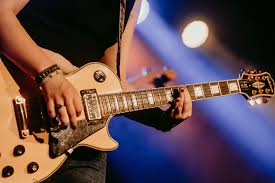
Rock music is a genre of popular music that originated in the United States as "rock and roll" in the late 1940s and early 1950s, developing into a range of styles from the mid-1960s, primarily in the United States and United Kingdom. It has its roots in rock and roll, a style that drew from the African-American musical genres of blues and rhythm and blues, as well as from country music. Rock also drew strongly from genres such as electric blues and folk, and incorporated influences from jazz and other styles. Rock is typically centered on the electric guitar, usually as part of a rock group with electric bass guitar, drums, and one or more singers. Usually, rock is song-based music with a 4/4 time signature and using a verse–chorus form; however, the genre has become extremely diverse. Like pop music, lyrics often stress romantic love but also address a wide variety of other themes that are frequently social or political. Rock was the most popular genre of music in the U.S. and much of the western world from the 1960s up to the 2010s.Rock musicians in the mid-1960s began to advance the album ahead of the single as the dominant form of recorded music expression and consumption, with the Beatles at the forefront of this development. Their contributions lent the genre a cultural legitimacy in the mainstream and initiated a rock-informed album era in the music industry for the next several decades. By the late 1960s "classic rock" period, a few distinct rock music subgenres had emerged, including hybrids like blues rock, folk rock, country rock, southern rock, raga rock, and jazz rock, which contributed to the development of psychedelic rock, influenced by the countercultural psychedelic and hippie scene. New genres that emerged included progressive rock, which extended artistic elements, heavy metal, which emphasized an aggressive thick sound, and glam rock, which highlighted showmanship and visual style. In the second half of the 1970s, punk rock reacted by producing stripped-down, energetic social and political critiques. Punk was an influence in the 1980s on new wave, post-punk and eventually alternative rock.
From the 1990s, alternative rock began to dominate rock music and break into the mainstream in the form of grunge, Britpop, and indie rock. Further subgenres have since emerged, including pop-punk, electronic rock, rap rock, and rap metal. Some movements were conscious attempts to revisit rock's history, including the garage rock and post-punk revival in the 2000s. Since the 2010s, rock has lost its position as the pre-eminent popular music genre in world culture, but remains commercially successful. The increased influence of hip-hop and electronic dance music can be seen in rock music, notably in the techno-pop scene of the early 2010s and the pop-punk-hip-hop revival of the 2020s. Rock has also embodied and served as the vehicle for cultural and social movements, leading to major subcultures including mods and rockers in the U.K., the hippie movement and the wider western counterculture movement that spread out from San Francisco in the U.S. in the 1960s, the latter of which continues to this day. Similarly, 1970s punk culture spawned the goth, punk, and emo subcultures. Inheriting the folk tradition of the protest song, rock music has been associated with political activism, as well as changes in social attitudes to race, sex, and drug use, and is often seen as an expression of youth revolt against adult conformity. At the same time, it has been commercially highly successful, leading to accusations of selling out.
Learn even more!
Rap
Rapping (also dropping, rhyming, flowing, spitting, emceeing, or MCing) is an artistic form of vocal delivery and emotive expression that incorporates "rhyme, rhythmic speech, and [commonly] street vernacular". It is usually performed over a backing beat or musical accompaniment. The components of rap include "content" (what is being said, e.g., lyrics), "flow" (rhythm, rhyme), and "delivery" (cadence, tone). Rap differs from spoken-word poetry in that it is usually performed off-time to musical accompaniment. It also differs from singing, which varies in pitch and does not always include words. Because they do not rely on pitch inflection, some rap artists may play with timbre or other vocal qualities. Rap is a primary ingredient of hip-hop music, and so commonly associated with the genre that it is sometimes called "rap music". Precursors to modern rap music include the West African griot tradition, certain vocal styles of blues and jazz, an African-American insult game called playing the dozens (see Battle rap and Diss), and 1960s African-American poetry. Stemming from the hip-hop cultural movement, rap music originated in the Bronx, New York City, in the early 1970s and became part of popular music later that decade. Rapping developed from the announcements made over the microphone at parties by DJs and MCs, evolving into more complex lyrical performances. Rap is usually delivered over a beat, typically provided by a DJ, turntablist, or beatboxer when performing live. Much less commonly a rapper can decide to perform a cappella. When a rap or hip-hop artist is creating a song, "track", or record, done primarily in a production studio, most frequently a producer provides the beat(s) for the MC to flow over. Stylistically, rap occupies a gray area between speech, prose, poetry, and singing. The word, which predates the musical form, originally meant "to lightly strike", and is now used to describe quick speech or repartee. The word has been used in the English language since the 16th century. In the 1960s the word became a slang term meaning "to converse" in African American vernacular, and very soon after that came to denote the musical style. Rap music has played a significant role in expressing social and political issues, addressing topics such as racism, poverty, and political oppression. By the 21st century, rap had become a global phenomenon, influencing music, fashion, and culture worldwide.
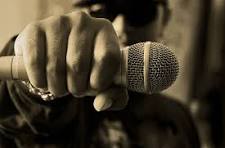
The English verb rap has various meanings; these include "to strike, especially with a quick, smart, or light blow", as well "to utter sharply or vigorously: to rap out a command".The Shorter Oxford English Dictionary gives a date of 1541 for the first recorded use of the word with the meaning "to utter (esp. an oath) sharply, vigorously, or suddenly". Wentworth and Flexner's Dictionary of American Slang gives the meaning "to speak to, recognize, or acknowledge acquaintance with someone", dated 1932, and a later meaning of "to converse, esp. in an open and frank manner". It is these meanings from which the musical form of rapping derives, and this definition may be from a shortening of repartee. A rapper refers to a performer who "raps". By the late 1960s, when Hubert G. Brown changed his name to H. Rap Brown, rap was a slang term referring to an oration or speech, such as was common among the "hip" crowd in the protest movements, but it did not come to be associated with a musical style for another decade. Rap was used to describe talking on records as early as 1970 on Isaac Hayes' album ...To Be Continued with the track name "Monologue: Ike's Rap I". Hayes' "husky-voiced sexy spoken 'raps' became key components in his signature sound". Del the Funky Homosapien similarly states that rap was used to refer to talking in a stylistic manner in the early 1970s: "I was born in '72 ... back then what rapping meant, basically, was you trying to convey something—you're trying to convince somebody. That's what rapping is, it's in the way you talk.It is sometimes claimed that “rap" is an acronym for 'Rhythm And Poetry', but this does not reflect the history of the word and thus is best seen as a backronym.(
more from the site)
Thank you for looking!
Click here to go to the index page.