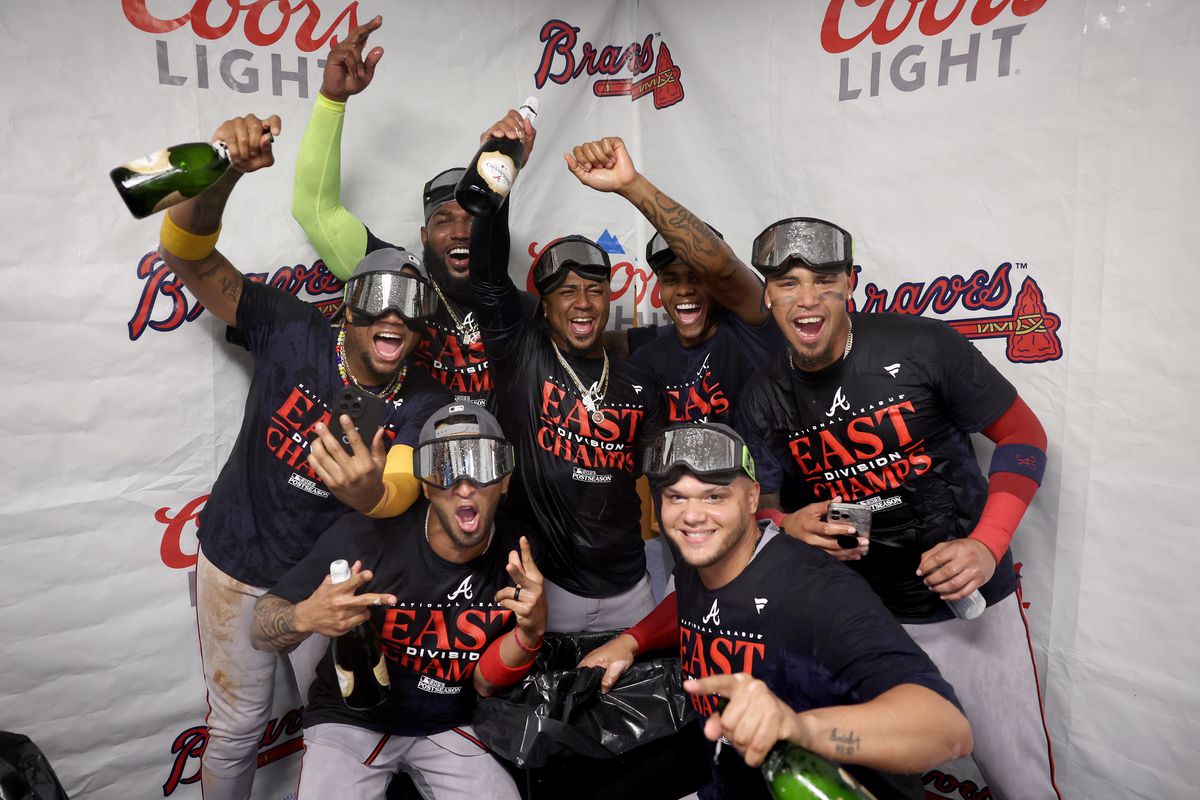
This is the story of the oldest continuously operating professional sports franchise in America. It's a story not only of great teams (the 1914 'Miracle' Braves, the 1995 World Champs), great ballplayers (Aaron, Spahn, Niekro and Murphy), memorable managers and pleasant stadiums, but also a story of heartbreaking losses and long pennant droughts. It's the story of the Braves and their ancestors - the Red Stockings, Beaneaters, Doves, Rustlers, and Bees - and their wanderings from Boston to Milwaukee and Atlanta. In a way, it's also the story of professional baseball in America. Although their first major confrontation occurred when the Mets swept the Braves in the 1969 NLCS, the rivalry did not become especially heated until the 1994 season when division realignment put both the Mets and the Braves in the National League East division. The Braves faced the Mets in the 1999 National League Championship Series. The Braves initially took a 3–0 series lead, seemingly on the verge of a sweep, but the Mets rallied in Game 4 and Game 5. Despite the Mets' resilience, the Braves eventually won the series in Game 6 with Andruw Jones securing a dramatic walk-off walk, earning their 5th National League pennant of the decade. In 2022, the Braves and Mets both finished with 101 wins. The National League East title and a first-round bye came down to a crucial three-game series at Truist Park from September 30 to October 2. The Mets entered with a slight lead but faltered as the Braves swept the series. Atlanta claimed the NL East division title and first-round bye, by winning the season series against the Mets. Since the Mets joined the league, both teams have won two World Series titles. The Braves have captured six NL pennants, while the Mets have won five. The Braves hold the advantage in the all-time head-to-head record between the two teams at 516–425. However, the Mets have the upper hand in playoff matchups with a 5–4 record.
The Atlanta Braves are an American professional baseball team based in the Atlanta metropolitan area. The Braves compete in Major League Baseball (MLB) as a member club of the National League (NL) East Division. The club was founded in Boston, Massachusetts, in 1871 as the Boston Red Stockings. The Braves are one of two remaining National League charter franchises that debuted in 1876 and are the oldest continuously operating professional sports franchise in North America. The franchise was known by various names until it adopted the Boston Braves name in 1912. After 81 seasons and one World Series title in Boston, the club moved to Milwaukee, Wisconsin, in 1953. With a roster of star players such as Hank Aaron, Eddie Mathews, and Warren Spahn, the Milwaukee Braves won the World Series in 1957. Despite the team's success, fan attendance declined. The club's owners moved the team to Atlanta, Georgia, in 1966. The Braves did not find much success in Atlanta until 1991. From 1991 to 2005, the Braves were one of the most successful teams in baseball, winning an unprecedented 14 consecutive division titles, making an MLB record eight consecutive National League Championship Series appearances, and producing one of the greatest pitching rotations in the history of baseball including Hall of Famers Greg Maddux, John Smoltz, and Tom Glavine. The club has won an MLB record 23 divisional titles, 18 National League pennants, and four World Series championships. The Braves are the only Major League Baseball franchise to have won the World Series in three different home cities. At the end of the 2025 season, the Braves' overall win–loss record is 11,190–11,035–154 (.503). Since moving to Atlanta in 1966, the Braves have an overall win–loss record of 4,926–4,547–8 (.520) through the end of 2025.
The Official Braves Website
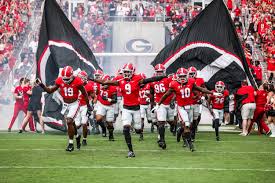
The Georgia Bulldogs football program represents the University of Georgia in the sport of American football. The Bulldogs compete in the Football Bowl Subdivision (FBS) of the National Collegiate Athletic Association (NCAA) and the Southeastern Conference (SEC). They play their home games at historic Sanford Stadium on the university's Athens, Georgia, campus. Georgia claims four national championships, including three (1980, 2021, 2022) from the major wire-services: AP Poll and/or Coaches' Poll. The Bulldogs' other accomplishments include 18 conference championships, of which 16 are SEC championships, second-most in conference history, and appearances in 63 bowl games, second-most all-time. The program has also produced two Heisman Trophy winners, five number-one National Football League (NFL) draft picks, and many winners of other national awards. In addition to its storied history, the team is known for its unique traditions and rabid fan base, known as the "Bulldog Nation." Georgia has won over 900 games in its history, placing them 9th all-time in wins and has finished in the Top 10 of the AP Poll 29 times, 15 of which were Top 5 finishes. History Main article: History of Georgia Bulldogs football See also: List of Georgia Bulldogs football seasons Georgia's first football team, 1892 Georgia's football program dates to 1892, when chemistry professor Dr. Charles Herty organized the university's first team and scheduled a game against Mercer, marking the first intercollegiate football contest played in the Deep South. Early seasons were marked by frequent coaching changes and modest success, though the Bulldogs achieved notable milestones under Glenn "Pop" Warner, including an undefeated season and a Southern Intercollegiate Athletic Association (SIAA) championship in 1896. The program survived a near shutdown following the death of player Richard Von Albade Gammon in 1897, after state legislation banning football was vetoed. By the 1910s and 1920s, Georgia had gained greater stability, producing All-Americans such as Bob McWhorter, moving from Herty Field to Sanford Field. From 1939 to 1960, Wally Butts led Georgia through one of its most successful eras, winning four Southeastern Conference (SEC) titles while coaching Heisman Trophy winner Frank Sinkwich and All-American Charley Trippi. Vince Dooley followed as head coach from 1964 to 1988, becoming the longest-tenured coach in program history. Under Dooley, Georgia won the 1980 consensus national championship (following a 17–10 Sugar Bowl victory of Notre Dame), six SEC titles, and produced standout players including running back Herschel Walker (winner of the 1982 Heisman Trophy and Maxwell Award) and defensive tackle Bill Stanfill (1968 Outland Trophy winner). Dooley was inducted in the College Football Hall of Fame in 1997. Later decades included mixed results under Ray Goff and Jim Donnan, with Donnan’s teams achieving consistent bowl success but failing to regain national prominence. Mark Richt coached the Bulldogs from 2001 to 2015, guiding the program to two SEC championships, multiple division titles, and sustained national relevance before parting ways with the university. UGA alumnus Kirby Smart, hired in 2015, ushered in a period of unprecedented dominance. Under Smart, Georgia reached the national championship game in his second season and won College Football Playoff national titles in the 2021 and 2022 seasons, becoming the first program to repeat as playoff-era champions. His teams also set records for postseason margin of victory (a 65–7 win over the TCU Horned Frogs (58-point difference) in the College Football Playoff National Championship following the 2022 season, which they broke with a 63–3 victory over the Florida State Seminoles in the 2023 Orange Bowl, establishing Georgia as one of the sport's leading programs in the modern era.
Nicknames The first mention of "Bulldogs" in association with Georgia athletics occurred on November 28, 1901, at the Georgia-Auburn football game played in Atlanta. The Georgia fans had a badge saying "Eat `em Georgia" and a picture of a bulldog tearing a piece of cloth; however, it was not until 1920 that the nickname "Bulldog" was used to describe the athletic teams at the University of Georgia. Traditionally, the choice of a Bulldog as the UGA mascot was attributed to the alma mater of its founder and first president, Abraham Baldwin, who graduated from Yale University.[citation needed] Prior to that time, Georgia teams were usually known as the "Red and Black." On November 3, 1920, Morgan Blake of the Atlanta Journal wrote a story about school nicknames and proposed:The Georgia Bulldogs would sound good because there is a certain dignity about a bulldog, as well as ferocity. After a 0–0 tie with Virginia in Charlottesville on Nov. 6, 1920, Atlanta Constitution writer Cliff Wheatley used the name "Bulldogs" in his story five times. The name has been used ever since. Conference affiliations Georgia was a founding member of the Southern Intercollegiate Athletic Association (SIAA), one of the first collegiate athletic conferences formed in the United States. Georgia participated in the SIAA from its establishment in 1895 until 1921. During its tenure in the SIAA, Georgia was conference co-champion in two years, 1896 and 1920. In 1921, the Bulldogs, along with 12 other teams, left the SIAA and formed the Southern Conference (SoCon).[9] During its time in the Southern Conference, the team never won a conference championship. In 1932, the Georgia Bulldogs left the Southern Conference to form and join the SEC, where Georgia has won the second-most SEC football championships, with 15, behind Alabama (27).Independent (1891–1895)Southern Intercollegiate Athletic Association (1896–1920) Southern Conference (1921–1932) Southeastern Conference (1933–present) Championships National championships Georgia has been selected eight times as national champions from NCAA-designated major selectors, including three (1980, 2021, 2022) from the major wire-service: AP Poll and/or Coaches' Poll. Georgia claims four national championships (1942, 1980, 2021, and 2022).
The Official Georgia Bulldogs Website.
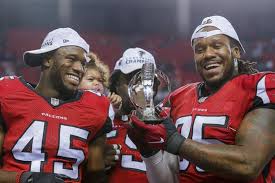
Main article: 2008 Atlanta Falcons season On January 23, 2008, Jacksonville Jaguars defensive coach Mike Smith was named the Falcons' new head coach. Matt Ryan, a quarterback from Boston College, was drafted third overall to be the new face of the franchise. Free agent Michael Turner was also acquired to help in the run game. Defying expectations, the Falcons managed an 11–5 season in 2008 and earned a wild cardplayoff berth. They did not get beyond that however, as they lost a 30–24 match against the eventual NFC champion Arizona Cardinals. 2009 Main article: 2009 Atlanta Falcons season In 2009, the Falcons suffered numerous devastating injuries to defensive players and to Turner (ankle) and Ryan (toe). The Week 13 game against the Philadelphia Eagles saw Michael Vick return to play his former team, in which he scored two touchdowns, one passing and one rushing. Atlanta was very nearly shut out, but in the closing seconds of the game scored a touchdown and brought the final score to 34–7. The following week, the team lost a close match against the eventual Super Bowl XLIV champion New Orleans Saints, which mathematically excluded them from the playoffs. Nonetheless, Atlanta managed to win their final three games and end the year with a 9–7 record, the first time in its history the team achieved back-to-back winning seasons.2010 Main article: 2010 Atlanta Falcons season The Falcons lost their 2010 opener to the eventual AFC champion Pittsburgh Steelers before crushing the Arizona Cardinals at home in Week 2. Atlanta then played its first divisional match of the season against the defending Super Bowl XLIV champion New Orleans Saints. In a closely fought game, the Falcons beat the Saints 27–24 with two minutes left in overtime. Then followed a 16–14 win over the struggling San Francisco 49ers. After games with the Cleveland Browns (a 20–10 win) and the Philadelphia Eagles (a 31–17 loss), they won a key division match against the Tampa Bay Buccaneers in Week 9 to claim a lead in the NFC South, putting them at 6–2 at the halfway point of their season. In the 2010 Thursday Night Football opener, the Falcons donned throwback uniforms and defeated the Baltimore Ravens 26–21 in a highly anticipated match-up of 6–2 teams, and the first meeting of the top two quarterback picks of the 2008 draft, in Ryan and Joe Flacco. Ryan set career highs for attempts and completions, going 32 for 50, and clinching the Falcons' first 7–2 record since the 1998 Super Bowl season. The Falcons secured their third straight winning season, a franchise first, with a win over the St. Louis Rams (34–17), and a victory in a highly anticipated game with the Green Bay Packers (20–17), which was a close game all the way up to the end, when kicker Matt Bryant sealed the game with a 47-yard field goal with 13 seconds on the clock, bringing the Falcons to an NFC-best 9–2 record. The next week the Falcons defeated their divisional rivals, the Tampa Bay Buccaneers 28–24, improving their record to an NFC best 10–2. Week 14 saw the first of two late-season matchups with the struggling Carolina Panthers. The Falcons got up 14–0 early in the game and went on to cruise to a 31–10 victory, raising their record to an NFC-best 11–2. Week 15 took the Falcons to the Pacific Northwest against the Seattle Seahawks. After a quick start by the Seahawks, the Falcons took control with a key touchdown pass late in the first half and a fumble recovery for a touchdown on the Seahawks' first possession of the second half to go up 24–10, eventually winning 34–18. The win (followed by a New York Giants loss) secured a playoff berth for the Falcons with two games left. With only one win needed in the final two games to clinch everything, Week 16 set up a Monday Night showdown with the defending Super Bowl champion New Orleans Saints. A low-scoring affair ended with the Saints pulling out a 17–14 win. Week 17 brought in the struggling Carolina Panthers and an easy win for the Falcons, 31–10. The victory clinched the NFC South Division title (only their fourth division title in the team's history) and clinching home-field advantage in the playoffs by claiming the number one seed in the NFC. However, their season had a disappointing end, with the Falcons suffering a loss at home in the divisional round of the playoffs to the eventual Super Bowl XLV champion Green Bay Packers by a margin of 48–21.2011 Main article: 2011 Atlanta Falcons season In 2011, Atlanta finished 10-6 and earned the fifth seed in the NFC playoffs. The Falcons failed to get out of the first round, however, as the eventual Super Bowl XLVI champion New York Giants defeated them 24–2, with Atlanta's only points coming off of a safety. 2012 Main article: 2012 Atlanta Falcons season In 2012, the Falcons won the NFC South and had the conference's best record at 13–3. Matt Ryan had the best season of his career, throwing for 4,719 yards and 32 touchdowns. Ryan directed an explosive passing attack featuring 1,000-yard receivers Roddy White (1,351 yards) and Julio Jones (1,198 yards), and future Hall of Fame tight end Tony Gonzalez, who led the Falcons with 93 receptions. In the playoffs, Atlanta narrowly defeated the Seattle Seahawks 30–28 in the divisional round after blowing a 27–7 3rd-quarter lead. The Seahawks took a 28–27 lead with 31 seconds left, but Ryan quickly led the Falcons downfield to set up Matt Bryant's game-winning 49-yard field goal with 8 seconds remaining. Atlanta would go on to host the NFC Championship Game and face the San Francisco 49ers. Just like the week before, the Falcons jumped out to an early lead (17–0) and could not hold onto it.
This time, they lost 28–24. 2013 Main article: 2013 Atlanta Falcons seasonIn 2013, Atlanta slipped to a 4–12 record, their first losing season since 2007. Injuries were also the story of the 2013 season. This was Tony Gonzalez' last year in the NFL.2014 Main article: 2014 Atlanta Falcons season In 2014, Atlanta improved by two games, and thanks to an extremely weak division, remained in playoff contention until the final week of the season, when their divisional rival, the Carolina Panthers, defeated them 34–3. The Falcons' final record that season was 6–10. After the season, Mike Smith was fired and replaced by Dan Quinn. 2015 Main article: 2015 Atlanta Falcons season The 2015 season marked the Falcons' 50th season of play in the NFL. The Falcons got out to a fast start in 2015 with 5 straight victories before losing their first game to their archrivals, the New Orleans Saints on the road on Thursday Night Football. They bounced back to defeat the Tennessee Titans but then went into a tailspin, losing six straight games before they finally defeated the Jacksonville Jaguars in Week 15. Then in Week 16, they scored a major upset by defeating the eventual NFC champion Carolina Panthers, who had beaten them 38-0 two weeks before, by the score of 20–13. This spoiled Carolina's chance at a perfect season. Sadly for the Falcons, they were eliminated from playoff contention for the third straight year after the Minnesota Vikings defeated the New York Giants later that day. They finished the regular season with a 20–17 loss at home to their archrivals, the New Orleans Saints, giving them a final record of 8-8. 2016: 28-3 The 2016 season was the Falcons 25th and final season at the Georgia Dome. They finished with an 11–5 record, earning them a first-round bye in the playoffs. Matt Ryan was named NFL MVP after the season. After defeating the Seattle Seahawks in the divisional round 36–20 and blowing out the Green Bay Packers 44–21 in the title game, the Falcons advanced to the Super Bowl for the first time in 18 years. Against the 14–2 Patriots, the Falcons started off strong, pulling away with a 28–3 lead nearing the end of the third quarter. However, Tom Brady and the Patriots mounted an incredible comeback, scoring 25 unanswered points to send the game into overtime for the first time in Super Bowl history. The Patriots received the ball in overtime, and drove down the field for the game-winning score, shocking the Falcons as they went home inches from the Lombardi Trophy.2017–2021 2017 After the Falcons' heartbreaking Super Bowl loss the year before, the Falcons returned in 2017 for a second shot at the Lombardi Trophy. 2017 was also the opening of Mercedes-Benz Stadium, the new home for the Falcons. One of their regular season games was also against the Patriots in a game known as "the Fog Bowl II." Overall, the Falcons finished 10–6, qualifying for a playoff spot despite being placed 3rd in the division. In the wild card round, the Falcons beat the 11–5 Los Angeles Rams 26–13. It was the first time in franchise history winning playoff games in back-to-back years. However, the Falcons season was stopped short the following week against the Eagles, 10–15. Main article: 2018 Atlanta Falcons seasonIn 2018, the Atlanta Falcons were expected by many to be the first team to play the Super Bowl in their home stadium. However, injuries plagued the team throughout the season as they fell to 4–9 and, with a Vikings win the following week, were mathematically eliminated from postseason contention. However, the Falcons were able to win their final three games to finish 7–9. 2019 Main article: 2019 Atlanta Falcons season In the 2019 season, Atlanta wasn't ready to give up. Nevertheless, they suffered a six-game losing streak following a week 2 win over the Eagles. Their 1–7 start was the worst since 2003. However, after their bye week in week 9, the Falcons caught fire, winning six of their final eight games to equal their 7–9 record from the previous year. In their season finale against the Buccaneers, the Falcons finished the game with a pick-six seven seconds into overtime, marking the shortest overtime in NFL history. 2020 Main article: 2020 Atlanta Falcons season After their phenomenal finish at the end of last year's season, the Falcons expected to do really well this season. However, things took a turn for the worse as the Falcons started off with five straight losses, their first such start since 1997. Two of these losses (in back-to-back weeks) included fourth-quarter leads of 15+ blown by the Falcons. The Falcons ended up firing head coach Dan Quinn after a Week 5 loss to the Panthers. Interim head coach Raheem Morris led the team to a 4–2 record over their next six games before the Falcons lost their final five games to finish last in the NFC at 4–12. On January 15, 2021, the Falcons hired Arthur Smith to be their head coach for the season. 2021 Main article: 2021 Atlanta Falcons seasonFor the first time since 2010, longtime receiver Julio Jones was not on the roster, as he was traded to the Tennessee Titans on June 6, 2021. The Falcons drafted tight end Kyle Pitts with the 4th overall pick in the 2021 NFL Draft. The Falcons improved on last year, ending the season at 7–10. The 2021 season was the Falcons' last season with Matt Ryan as he was traded to the Indianapolis Colts on March 21, 2022. 2022–present: Post Matt Ryan era 2022 Main article: 2022 Atlanta Falcons season The Falcons matched their record from last season at 7–10. One highlight is the fact that the Falcons have upset the NFC South champions Tampa Bay Buccaneers in the season finale to win their first and only game against Tom Brady. 2023 Main article: 2023 Atlanta Falcons season After a surprising 2–0 start, the Falcons not only fail to make the playoffs but would match their 7–10 record from the last 2 seasons. On January 8, 2024, head coach Arthur Smith was fired after 3 seasons. 2024 Main article: 2024 Atlanta Falcons season On January 25, 2024, the Falcons named Raheem Morris as their full time head coach after being the interim for the 2020 season. The Falcons finished the seasons 8–9, an improvement from the three previous seasons stuck at 7–10.
Atlanta Falcon Official Website
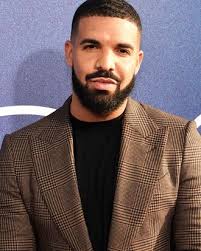
Aubrey Drake Graham (born October 24, 1986) is a Canadian rapper, singer, and actor. He is credited with popularizing R&B sensibilities in hip-hop music. Drake first gained recognition by starring as Jimmy Brooks in the CTV Television Network teen drama series Degrassi: The Next Generation (2001–2008) and began his music career by independently releasing the mixtapes Room for Improvement (2006), Comeback Season (2007), and So Far Gone (2009) before signing with Young Money Entertainment. Drake's debut album, Thank Me Later (2010), debuted atop the Billboard 200. All of his subsequent studio albums—including Take Care (2011), Nothing Was the Same (2013), Scorpion (2018), Honestly, Nevermind (2022) and For All the Dogs (2023)—also reached number one in the US. His fourth album, Views (2016), led the Billboard 200 for 13 weeks and his sixth album Certified Lover Boy (2021) set the then-record for most US top-ten songs from one album (9). Drake's catalogue of high-charting singles includes "Best I Ever Had", "Find Your Love", "Take Care", "Started from the Bottom", "Hold On, We're Going Home", "Hotline Bling", "One Dance", "Passionfruit", "God's Plan", "Nice for What", "In My Feelings", "Toosie Slide", "Way 2 Sexy", "Fair Trade", "Jimmy Cooks", "Rich Flex", "Slime You Out", "First Person Shooter". As an entrepreneur, Drake founded the OVO Sound record label with longtime collaborator 40 in 2012. In 2013, he became the "global ambassador" of the Toronto Raptors, joining their executive committee and later obtaining naming rights to their practice facility OVO Athletic Centre. In 2016, he began collaborating with Brent Hocking on the bourbon whiskey Virginia Black. Drake heads the OVO fashion label and the Nocta collaboration with Nike, Inc., and founded the production company DreamCrew and the fragrance house Better World. In 2018, he was reportedly responsible for 5% (CAD$440 million) of Toronto's CAD$8.8 billion annual tourism income. Drake has been subject of widespread media coverage due to his popularity and rap feuds, including with Kanye West and Kendrick Lamar. Among the world's best-selling music artists, with over 170 million units sold, Drake is also ranked as the highest-certified digital singles artist in the United States. His accolades consist of 5 Grammy Awards, 6 American Music Awards, 41 Billboard Music Awards, 2 Brit Awards, and 3 Juno Awards. Billboard named him the Artist of the Decade (2010s) and the fourth greatest pop star of the 21st century. He has achieved 14 Billboard 200 number-one albums, a joint-record among male soloists, and 13 Billboard Hot 100 number-one singles, a joint-record for a male solo artist. Drake holds further Hot 100 records, including the most top 10 singles (81), the most top 40 singles (217), the most charted songs (359) and the most consecutive weeks on the chart (431). He additionally has the most number-one singles on the R&B/Hip-Hop Airplay, Hot R&B/Hip-Hop Songs, Hot Rap Songs, and Rhythmic Airplay charts.Early life For high school, Drake attended Forest Hill Collegiate Institute (left) and Vaughan Road Academy (right) Aubrey Drake Graham was born on October 24, 1986, in Toronto, Ontario. His father, Dennis Graham, is an African-American drummer from Memphis, Tennessee, who once performed with musician Jerry Lee Lewis. His mother, Sandra "Sandi" Graham (née Sher), is a Canadian Ashkenazi Jew, who worked as an English teacher and florist. Graham performed at Club Bluenote in Toronto, where he met Sandra, who was in attendance. Drake is a dual citizen of the United States and Canada, the former derived from Graham. In his youth, he attended a Jewish day school and became a bar mitzvah.Drake's parents divorced when he was five years old. After the divorce, he and his mother remained in Toronto; his father returned to Memphis, where he was incarcerated for a number of years on drug-related charges. Graham's limited finances and legal issues caused him to remain in the US until Drake's early adulthood. Prior to his arrest, Graham would travel to Toronto and bring Drake to Memphis every summer. Graham claimed in an interview that Drake's assertions of him being an absent father were embellishments used to sell music, which Drake vehemently denies.
Drake was raised in two neighbourhoods. He lived on Weston Road in Toronto's working-class west end until grade six and attended Weston Memorial Junior Public School until grade four, playing minor hockey with the Weston Red Wings. Drake was a promising right winger, reaching the Upper Canada College hockey camp, but left at the behest of his mother following a vicious cross-check to his neck during a game by an opposing player. He moved to one of the city's affluent neighbourhoods, Forest Hill, in 2000. When asked about the move, Drake replied, "[We had] a half of a house we could live in. The other people had the top half, we had the bottom half. I lived in the basement, my mom lived on the first floor. It was not big, it was not luxurious. It was what we could afford." At age 10, Drake appeared in a comedic sketch which aired during the 1997 NHL Awards, featuring a riff of Martin Brodeur and Ron Hextall and their record as being the only goalies to have scored multiple goals. He attended Forest Hill Collegiate Institute for high school, and attended Vaughan Road Academy in Toronto's multicultural Oakwood–Vaughan neighbourhood; Drake described Vaughan Road Academy as "not by any means the easiest school to go to". During his teenage years, Drake worked at a now-closed Toronto furniture factory owned by his maternal grandfather, Reuben Sher. Drake said he was bullied at school for his racial and religious background, and upon determining that his class schedule was detrimental to his burgeoning acting career, he dropped out of school. Drake received his high school diploma in October 2012 at age 25. Career 2001–2009: Career beginnings At 15, Drake was introduced to a high school friend's father, an acting agent. He found Drake a role on the Canadian teen drama series Degrassi: The Next Generation, in which Drake portrayed Jimmy Brooks,[41] a basketball star who became physically disabled after he was shot by a classmate. When asked about his early acting career, Drake replied, "My mother was very sick. We were very poor, like broke. The only money I had coming in was [from] Canadian TV." According to showrunners Linda Schuyler and Stephen Stohn, Drake regularly arrived late on set after spending nights recording music. To prevent this, Schuyler claimed Drake struck an agreement with the set's security guards to gain entry to the set after recording to be allowed to sleep in a dressing room. Drake's first recorded song, "Do What You Do", appeared on The N Soundtrack, which was released by The N (the night-time block for Noggin), as it was the network that the series was airing on in the United States. Lil Wayne, the founder of Young Money Entertainment, signed Drake to the label in 2009. During his early career, Graham co-formed the R&B duo The Renaissance with singer Melanie Fiona, although not releasing an album. Being musically inspired by Jay-Z and Clipse, Drake self-released his debut mixtape, Room for Improvement featuring Trey Songz and Lupe Fiasco, in 2006. Drake described the project as "pretty straightforward, radio friendly, [and] not much content to it". Room for Improvement was released for sale only and sold roughly 6,000 copies, for which Drake received $304.04 in royalties. He performed his first concert on August 19, 2006, at the Kool Haus nightclub as an opening act for Ice Cube, performing for half an hour and earning $100. In 2007, Drake released his second mixtape Comeback Season. Released from his recently founded October's Very Own label, it spawned the single "Replacement Girl" featuring Trey Songz. The song sampled "Man of the Year" by Brisco, Flo Rida, and Lil Wayne, retaining Lil Wayne's verse; the rapper invited Drake to Houston to join his Tha Carter III tour. On tour, Drake and Lil Wayne recorded multiple songs together, including "Ransom", "Forever", and a remix to "Brand New". In 2009, Drake released his third mixtape So Far Gone. It was made available for free download through his OVO blog website, and featured Lil Wayne, Trey Songz, Omarion, Lloyd, and Bun B. It received over 2,000 downloads in the first 2 hours of release, finding mainstream commercial success from the singles "Best I Ever Had" and "Successful", both gaining Platinum certification by the Recording Industry Association of America (RIAA), with the former also peaking at number two on the Billboard Hot 100. This prompted the mixtape's re-release as an EP, featuring four songs from the original, as well as the additions of the songs "I'm Goin' In" and "Fear". It debuted at number six on the Billboard 200, and won the Rap Recording of the Year at the 2010 Juno Awards. Due to the success of the mixtape, Drake was the subject of a bidding war from various labels, often reported as "one of the biggest bidding wars ever". He had secured a recording contract with Young Money Entertainment on June 29, 2009. Drake joined the rest of the label's roster on the America's Most Wanted Tour in July 2009. However, during a performance of "Best I Ever Had" in Camden, New Jersey, Drake fell on stage and tore the anterior cruciate ligament in his right knee. In 2009 The Nightingale Company, the studio of television producer Debbie Nightingale, announced the development of Us and Them, a television comedy series which would have starred Graham and his Degrassi castmate Mazin Elsadig, although the series was never completed.
Drake Official Website
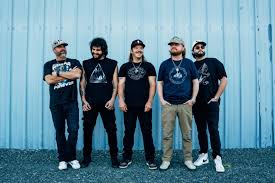
The Texas quintet Treaty Oak Revival has leapfrogged from small clubs in their native Odessa to headlining Dickies Arena in what seems like a blink of the eye. But the size of the venue barely matters: It’s bacchanalia everywhere they go. Treaty Oak shows are packed with blurry-eyed fans singing along to songs about dudes who are just as messed up as they are. Each night during “Boomtown,” the band takes part in a ritualistic “beer shower,” with fans and musicians flinging suds at each other. They didn’t title their third and latest album West Texas Degenerate for nothing. But wait a minute. Aren’t several band members on the wagon? “It’s an interesting dichotomy, isn’t it?” says rhythm guitarist Lance Vanley, one of the members who still imbibes from time to time. Lead singer/songwriter Sam Canty and drummer Cody Holloway are sober.“For 90 minutes, we’re there to put on that party for our fans. But for us, onstage, it’s better that we don’t need substances to facilitate putting on a good time.” The band – which also includes Dakota Hernandez (bass) and Lance’s uncle Jeremiah Vanley (lead guitar) – formed in 2018 as an Odessa cover band, named after the historic live oak tree in Austin. Its influences range from Cross Canadian Ragweed to Van Halen to Blink-182. But over the course of two independently released albums, its sound coalesced into what Vanley calls “Southern rock and country.” Some pundits have dubbed it “country grunge,” but Vanley isn’t keen on that label. He says the grunge-y guitar sound on West Texas Degenerate is the result of working with London-based engineer Adrian Bushby, who won a Grammy for his work with Foo Fighters. “I know grunge. But I'm not, like, a huge fan where I could pop off a whole bunch of trivia about it.” Lyrically, the band’s songs are filled with rebels without a clue who drink and drug themselves into a “Bad State of Mind,” to quote a new song title. But the defining song on West Texas Degenerate may be “Withdrawals,” which Canty, the main songwriter, wrote about his experience with alcohol withdrawal delirium after years of heavy drinking. “When he first stopped, it was crazy. He had hallucinations for three or four days where he’d see a tiger walk through the living room,” Vanley says. Several songs on the new album reflect the “growth and accountability” of the band, whose members range in age from mid-20s to early 40s. Most of the guys are married with kids. “The biggest misconception is that we're a bunch of wild, crazy partiers. People tend to be very surprised when they come back to the green room and it's, like, wives and babies. Treaty Oak is basically a big family for us,” he says. The clan has scattered from Odessa in recent years. Several live in D-FW – Vanley in South Arlington, Hernandez in a town south of Dallas – while others live in Oklahoma and the Texas Hill Country. Not that they make it home very often. After they close out 2025 with a big New Year’s Eve show at the Toyota Center in Houston, the group heads out on a 25-city U.S. tour in February. Already this year, Treaty Oak Revival has toured Australia, made its late-night TV debut on Jimmy Kimmel Live! and been nominated as best new group by the Academy of Country Music. But Vanley says the biggest thrill was playing the Grand Ole Opry. “Being from small towns in West Texas, the Grand Ole Opry was always on our bucket list,” Vanley says. “Walking on that stage is a memory we’re gonna hold for the rest of our lives.” In the future, Treaty Oak Revival may delve deeper into the acoustic style it explored on The Talco Tapes, its May album featuring folky versions of its older songs and a cover of the Goo Goo Dolls’ hit “Name.” But Vanley says the band isn’t actively planning its time ahead. It’s too busy savoring the moment. “This is what I've wanted to do since I was a kid. So the fact that I get to do it, for real, is crazy,” he says. “If this is a pipe dream, don’t wake me up.”
Sam Canty knows the power of a Treaty Oak Revival concert, but he long ago stopped trying to make any sense of it. “I can’t believe I’m making somebody feel like this or act like this,” says the band’s frontman of the crowd-surfing and beer-hurling that seems to follow the five-piece on the road. After a two-year run in which the group went from clubs to theaters to arenas, buoyed by a string of platinum and gold singles and one of the most exciting live experiences in all of music, Treaty Oak Revival are on the brink of bona fide superstardom. The independent outfit’s third studio album, the 14-track West Texas Degenerate that dropped on Friday, is poised to remove that “brink” caveat for good. It’s also an album that finds a band who rocketed to fame in Texas with songs about prostitutes (“Fishnets”) and whiskey (“Ode to Bourbon”), growing up.“The point of this record was to show growth and what that means,” Canty tells Rolling Stone. “Overcoming addiction, finding love, just stuff we haven’t really talked about in our songs. We come from a small town where, when you were young it was drinking and partying and having a good time, and not really caring about the world or having any responsibility. Eventually, you get thrown into the real world and you realize that the real world doesn’t care about your plans. You’re going to assimilate whether you want to or not.”The band consists of Canty on lead vocals and Jeremiah Vanley on lead guitar, along with Vanley’s nephew, Lance Vanley, on rhythm guitar. Cody Holloway plays drums and Dakota Hernandez stepped in on bass this summer after founding bassist Andrew Carey left the band in June. They came together in Odessa, Texas, in late 2018, playing music as a hobby. They’ll close out 2025 with back-to-back headlining gigs at Oklahoma City’s Paycom Center and Dickie’s Arena in Fort Worth, along with a New Year’s Eve show at the Toyota Center in Houston. Their camp is run by EKidd Artist Management in partnership Bob Doyle & Associates — the latter being the same team that oversaw Zach Top’s recent rise to stardom. Four years ago, Treaty Oak were a local bar band in Odessa, so you’d have to forgive the group for not yet fully grasping what it means to play to thousands, or on occasion, tens of thousands of fans every night.“At the beginning of this year, our stage manager yelled at me for the first three shows because I kept wrapping up cables to put up in the box,” Lance Vanley says. “He would go, ‘Stop touching stuff! That’s why you hired me!’” Before Treaty Oak played the first show of a three-night stand at the 5,600-capacity Whitewater Amphitheater in New Braunfels, Texas, in August, the members gathered in the green room to reflect on their breakthrough moment and look ahead to West Texas Degenerate. By then, Treaty Oak had already released a pair of songs, “Happy Face” and “Bad State of Mind,” that also made the cut for the new record. Both songs cracked the top 30 on Billboard’s country chart, and “Happy Face” has been certified gold.
Treaty Oak Revival Official Store
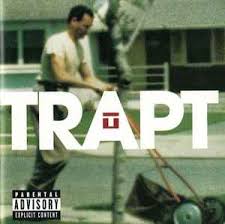
A rock band faces two choices in life — to make money performing radio rock or to venture into the less lucrative unknown. Trapt has obviously chosen to tread the beaten path. Maybe they veer off here and there, but they never lose sight of the road. Trapt's latest effort, Someone In Control, correspondingly plays it safe. Hoping to follow up their breakout single "Headstrong" with another smash, the band has served up an album of hard rock tinged with the faintest hint of emo. While the first single off the new album, "Stand Up," isn't quite as catchy as "Headstrong," other songs on the album may yet become rock radio staples. Since its 2002 self-titled debut, the band has locked into a satisfying but formulaic hard rock style ideal for FM airwaves. There isn't much room for variation, but the band is good at what it does. It is obvious Trapt borrows heavily from their modern-rock peers. The California band is reminiscent of a watered-down 3 Doors Down (though 3 Doors Down has become less and less exciting since The Better Life). Most songs contrast airy, effects-laden verse sections with down-and-dirty distorted refrains. Trapt have become true masters, or at least good imitators, of the light-and-dark approach Led Zeppelin pioneered so long ago. For a hard rock fan, listening to Someone In Control is like eating candy for lunch; it tastes good but lacks substance. Almost anyone could enjoy humming along to the verses and singing along with the choruses, but the "music high" is bound to crash. Trapt sound like career musicians. They put in their time practicing, produce an album, get some radio play and go on tour. Nothing within the process stands out. It almost sounds like Trapt approach their music like any Joe Schmoe would approach his steady nine-to-five job.
That's not to say Somone In Control doesn't have its moments. The refrain on "Disconnected (Out of Touch)" plays like a hard rock mantra. The lyrics — "Too out of touch, out of touch to touch you" — fit in perfectly with the balls-out riff the band launches into. The refrain of "Victim" ("I want your eyes, I want your eyes on me") and the short vocal harmony part on "Waiting" are also especially catchy. That said, the album does have its share of bad moments, mainly when the band shies away from the moderately fast riff rock they do best. The softer approach on "Lost Realist" turns the song into a toothless mockery of an up-tempo ballad. On songs like "Use Me To Use You," the band tries too hard to come up with a catchy refrain and ends up falling flat on its face. Another problem is that for most of the album, the vocals fail to stand out. Every truly great hard rock band bases its sound on a powerful singer. Tool has the haunting echo of Maynard Keenan. System of A Down has the frighteningly spastic insanity of Serj Tankian. Incubus has the weightless androgyny of Brandon Boyd. Unfortunately, Trapt only has Chris Brown, whose main vocal talent is the ability to stay in tune. He can put a little edge on his voice, but the vocals remain indistinct. While the songs are solid, there's nothing to push them from pleasant to unforgettable. Accordingly, the instrumentalists provide most of the album's spice. Guitarist Simon Ormandy engages the listener with shimmering textures on songs like "Bleed Like Me" and "Repeat Offender." Bassist Peter Charell adds tasty one-measure bass solos to several songs. The drums are tight, but mostly just provide a reliable backbeat. The band is definitely ready for radio play, but not the pantheon of great rock bands. According to the group's biography on its official website, "Trapt is a young band that likes it hard and heavy … but also defies all classification." In reality, Trapt doesn't defy classification, but actually fits neatly into the category of "radio friendly hard rock band." However much emphasis Trapt may put on their "eclectic" sound, at the end of the day, they're just another standard band with a standard sound. People looking to do nothing more than turn up their headphones will be pumped up by Someone In Control. For anyone looking for something in the way of musical revelation or innovation, they've come to the wrong place.
Trapt Official Website
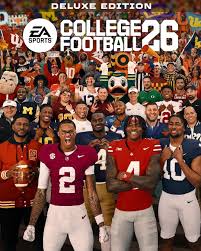
After a long hiatus, the venerable EA Sports College Football franchise returned last season. We were, for the most part, very complimentary of those efforts. Sure, there were some warts. The game was a bit bare bones next to previous installments released a decade ago. There was definite jank. But there was still a lot to love, and like all new loves, those surface-level sins were able to be overlooked. Had the experience been 18-20 hours, the mostly-positive praise would have remained.However, like a long-term relationship, some of the game’s flaws were not readily apparent — they took a long time to manifest, and only oozed to the surface after dozens and dozens of hours spent engaging with the game. Sadly, some of them would prove to be near fatal, particularly immersion, interactivity, and the core game play loop: Bad blocking AI, unrealistic DB mechanics, lack of cross-platform progression, lack of formation subs, uneven difficulty spikes, Road to Glory modes, online matchmaking etc. It somewhat soured us on the title. EA assured players that changes would be forthcoming. However, after we accessed the closed beta for CFB 2026, we were not pleased with the dribs and drabs of gameplay that had been released to us. Well, anyone who is not a shill, anyway.Many promises were made, but it looked like the same ole’ EA: outlandish promises teetering on the edge of vaporware, heavy emphasize on monetization, and too little in-game changes to meaningfully notice. Then the full evaluation copy was released, and once the surface-level trappings were removed, our worst fears were confirmed…then some. EA CFB 2026 on its face is a somewhat better user experience than 2025, though the skeleton of the franchise is readily familiar to anyone who’s picked up a Bill Walsh or CFB title anytime in the last 30 years. We won’t cover that — presumably everyone reading this has played some version of this (or Madden). So we’ll go over what EA got right, what improved, what remains lacking, and the games failures: which are plentiful and overshadow what fun is to be had here. What went right There are some genuinely cool things in here, but most are immersion-related. I’m not saying those are unnecessary; to the contrary, that was our biggest gripe last year. And it’s clear the dev team spent much time on making it a prettier, more lively game. The crowd dynamics and NPC faces have been improved. Coaches may not always resemble themselves, but EA did add real ones to the sidelines. Coach customization has been improved. It is, of course, a beautiful experience on the field and in those aerial panoramas. Dynamic lighting has been added, which makes for a sumptuous visual feast — and it only took the largest game company in the world a decade to do what Witcher 3 included a decade ago. Afternoon games turning to night is genuinely awesome. The overhead sun at noon grows into one that blasts the visitor’s bench by the fourth quarter. It feels right, and EA should be applauded for it. The left stick controls are a lot more responsive and more fluid. Last year, they were overly stiff and a little sluggish. That has been corrected, and all to the good. Hallelujah. There are far more musical selections now, instead of the drumline menu screen that drove everyone nuts. Relatedly, the devs built in some stadium- and team-specific intros: Seven Nation Army at South Carolina, Enter Sandman in Blacksburg, Swag Surfing at Auburn, etc. Fantastic. More of this, please. We finally got position and personnel subs, absent from last year’s game.
Even better, you can do these on the fly, and sub in and out before the snap. Excellent feature. And, well…that’s about it. Mixed Results The landing menu has changed. Last year’s menu was at least neutral. This one is apt to be divisive. Like some major media outfits who shall remain nameless, it seems like a change was made for the sake of change. The UX is not improved, and some may find it more confusing. EACFB26 added hundreds of new plays. And choice is always good, right? In some cases, it is. There are far more motion plays this year, and the game even included double shifts (which you will use for motion-based offenses like ‘Bama’s scheme). The problem lies in that too few of the plays are effective, and in many cases the reliance on play-action, runs you right into the teeth of one of the game’s worst features: blocking (we’ll cover that in a moment). Home field advantage matters a lot more in EACFB26. But, as we see throughout the game, it is overcorrected: Even routine plays are difficult to execute over the “Home Pulse” feature. “But that’s how it should be,” I can hear you say, “road games are meant to be hard.” Sure, in Death Valley or Autzen or the Horseshoe — not if you bring Georgia for a game in Toledo’s Glass Bowl. There are no shades of gray here. Home field is home field, by god, and you will be punished for playing on the road. If EA were in charge of last year’s Alabama-Wisconsin game, that score would have been flipped. The game overall feels and plays slower. For those who want a casual experience, having more time to process is a bonus. But for anyone who’s played prior titles, the nerf will be noticeable and highly frustrating. On the whole, recruiting is significantly more difficult. They did add geographic-location based recruiting, and that’s much needed: Georgia should be having more success in Georgia than Ole Miss is. But the trade they made was apparently making recruiting far, far harder no matter your school— from blue bloods to UTEP.They spent a lot of time adding more immersive color analysis. For instance, I had lost three straight SEC games with my expansion-era Eastern Michigan Eagles, and Rece noted that, as well as brought up our general struggles with pass blocking throughout the season. It was cool to hear that sort of stuff in the preview. Like dynamic lighting, it’s one of those changes that feels so natural, it’s almost jarring that it was never there before. However, much of the confused or irrelevant banter in the booth remains, as does the sometimes irrelevant analysis at breaks. That’s to be expected with a game that records 300,000 lines of dialogue, I suppose. But it is baffling how choice-based RPGs can get situation, disposition, and outputs right, and a sports title cannot.
NCAA College Football 26 Official Website
With MLB The Show 25 being only next-gen, I was expecting a big difference with graphics, and I wasn’t disappointed, except for one feature. The attention to detail for each player model and facial expression is the best we have seen from the franchise. You sometimes can be fooled into thinking you’re watching a broadcast of an MLB game until you look a little closer at the stadiums. I don’t know what it is, but in any stadium with a water feature, and there are many, the water looks terrible. It can sometimes be distracting, and it’s been an issue for years. Kauffman Stadium in Kansas City has a water feature in center field, but it looks more like a sheet of aluminum on a roller when you play the game. When I’m playing the game, and I have the option of not choosing a stadium that has a water feature, I do. Other ballparks, like Rogers Centre, where my hometown Toronto Blue Jays play, look fantastic, and the sights and sounds bring the stadium to life. If you turn on the instant reply, you can see the details the players and stadiums have in MLB The Show 25. MLB The Show MLB The Show 25 has added many more visuals to the game’s presentation, making it feel like the transition between plays in a live baseball game. Each home team has a theme for their broadcasts, incorporating team colours, making each game feel unique depending on the ballpark you’re playing in. When using franchise or exhibition modes, you can use the retro graphic theme we have seen in storylines and moments from the 1960s until 2009. It allows you to relive different ears of the game if you want to replay historical broadcasts like when the Blue Jays won the World Series in 1993. You won’t be able to play with all of the players from back then, but you can make the game’s presentation feel like back then with some available legends. MLB The Show The sound design is second to none, and I feel they have stepped up their game in some areas but still need to improve in others. We have more sounds from the game and different bat sounds that weren’t in previous versions. You can hear the ball hit off the bat differently, and from the sound, you only know what type of contact your bat has made with the ball. They had added more player heckling from the fans, and when playing as Derek Jeter at Citi Field, you can hear Mets Fans taunt him, but when playing at Yankee Stadium, you hear them chant “Derek Jeter.” MLB The Show 25 wants you to have the same experience you would have watching the game or being at the ballpark while playing the game. I wish they would get some updated anecdotes about players. Some announcers’ stories have been in the game for several years. Because of the gameplay overhaul MLB The Show 24 saw, the gameplay in MLB The Show 25 wasn’t changed much, but they did introduce Ambush Hitting. Ambush Hitting is when you use the right thumb stick to guess which side of the plate the pitcher will throw the ball. If you guess correctly, your PCI will be higher, making it easier to hit the ball, but if you guess incorrectly, it will be lower, making it more challenging to hit. I wasn’t a fan because it added one more thing I needed to do to hit the ball, but I knew that once I got used to it, I would become a better hitter. MLB The Show has always had authentic hitting, and I know the team at San Deigo Studio has added this to give people that extra edge. You would have an advantage if it were real baseball and you anticipated where the pitch would be thrown. They didn’t deliver significant overhauls this year to the gameplay, but I was okay with it because I’m still getting used to PCI changes from last year.
MLB The Show The fundamental changes come in game modes this year. Storylines that first got introduced in MLB The Show 22 are back and we get season three of the Negro Leagues. Hopefully, like last year, we will also get some legendary storylines, but they haven’t been announced yet. The storyline is some of my favourite content in the MLB The Show because you get to relive history and learn about baseball as the player. Graphically, they take you back, and the gameplay looks historically accurate, from the dirt on the mound to the cleats on your feet. Road to the Show had a massive overhaul this year, letting you start your high school career and test it out before playing in college to improve your pro before entering the minors. By the time your created player gets to the major, he has better attributes, making it a more enjoyable experience when you play the game. MLB The Show Diamond Dynasty got a whole new revamp, and fans should be rejoicing. Gone are sets and seasons, and back is the grind to 99. For the last two versions of MLB The Show, the team at San Diego Studio has been making the game feel more like pay to win instead of rewarding you for playing. Many sports games make you pay for a lot of content, but MLB The Show has always made the content obtainable in the past. If you wanted to pay for it, you could. In MLB The Show 22, and 23 the sets and seasons felt more like everything was behind a pay wall and it sucked the enjoyment out of the game mode. All cards you unlock are back to being available in earnable packs and through the programs and additional programs. Team Afinity allows you to earn rewards towards your favourite team now and now just each division and rewards you for the whole season. I always loved building an ultimate Toronto Blue Jays team, and now I can and will always earn rewards for doing so. Each team has their program in the Team Affinity mode inside Diamond Dynasty, and it’s a welcomed change. MLB The Show This year, they added a new rogulike mode to Diamond Dynasty called Diamond Quest. It looks like a broad game, with you rolling a dice to get across the screen and earn rewards. If you lose any events, you will get disadvantaged in your next match and earn lesser rewards. If you win your events along the way, you will get boosts you can use, like more velocity on pitches or a higher chance of hitting home runs in your next match. These advantages and disadvantages can only be used in Diamond Quest. Again, game modes like March to October, Mini Season, and Conquest are still there, so you can earn XP towards the program along with earning special rewards in those game modes, like unique cards of some of baseball’s biggest legends from the past. My favourite player of all time, Jose Bautista, is one the first legnds you can earn in the game, and it was a welcome sight for me to see him in the game. Other notable legends you can use in the diamond dynasty this year are Manny Ramirez, Roger Clemens, James “Cool Papa” Bell, Jason Kipnin, Lance Berkman, Bobby Abreu, Jason Varitek, and Clay Buchholz.

The Show Official Website
The world of ARC Raiders is a harsh one for any player trying to delve into its chaotic extraction battles -- and sometimes not even the most desperate measures are enough to turn the tide, as a recent livestream by Cincinnati Bengals wide receiver Ja'Marr Chase has proven. During an outing in Speranza, the fictional location currently serving as ARC Raiders' main map, Chase was downed by his opponent during a firefight in a concrete tunnel. The culprit couldn't enjoy their triumph for very long, though, as a third player appeared pretty much immediately afterwards to take them out as well, which Chase enthusiastically (and profanely) welcomed. Getting knocked down is not the end in this extraction shooter. Players can be revived and return to the battle, if someone else is willing to use a defibrillator on them -- hence Chase's ability to cheer on his killer's demise. He immediately went on to plead his case with the new arrival, offering them season tickets for the Bengals in exchange for a revive. Unfortunately for Chase, his potential savior turned out to be rather uninterested in that particular trade. Just as the NFL star was desperately pleading for his life, bargaining with the season tickets, the other player initiated a flashy finishing move on him. "I can give you tickets for the whole season bro, wait," are the final words the other player must have heard via the in-game comms before they sent Chase's character into the afterlife. Chase took the loss well, laughing and clapping as the screen faded to black.
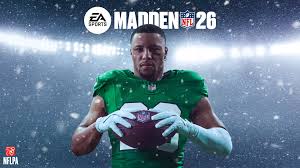
Franchise’s Weekly Strategy has also been redesigned to more accurately reflect the reality of gameplanning for another team in the NFL. Each week, you’ll get a Staff Loadout, where you can equip your Coach Abilities (from your Head Coach, Offensive Coordinator, and Defensive Coordinator) to prepare for your opponent. If you’re up against a great passing team, you might wanna throw in some abilities that will help you defend against the pass. If you’ve got an easy schedule or you’re rebuilding, it might be a good time to sacrifice some Gameday Abilities for some Season Abilities to build your team for the long haul. How you prepare is completely up to you, but you’ll have much more information about the opposing team, how your team matches up with them, and how they might be planning for you to work with. In addition, you’ll also have access to Playsheets. Think mini-playbooks that will provide additional plays that could be focused on anything from blitzing the opposing QB to running the ball. Like Coach Abilities, Playsheets can be upgraded or lost depending on how you play, and you can master them and keep them forever. Higher tiers of Playsheets will not only give you access to that sheet, but also bonuses to your players on the field when you call those plays. Playsheets will have their own tab in the playcalling menu, so you’ll be able to access them easily and see how well they’re working.You’ll also be managing your staff, as well as your week-to-week gameplan. You’ll hire and fire coordinators, track their performance, and level them up. There’s also a new stat called Job Security, which shows, well… how secure everyone’s job is, which is naturally based on how well the team is doing. All of that stuff is in a new place called Coach Central, which is your home for everything coaching related in Franchise. You’ll also see how you manage your relationships with the team’s GM, the coaches on your staff, your players, your team’s fanbase, and the media, which will give you a real-time view of where you stand. You might survive a low Approval Rating one year, but you’ll carry it into the next one, which makes your job harder. Naturally, all of this stuff will blend in with storylines that progress as the season goes on. These are absolutely massive changes to how Franchise works, and I’m interested to see how all of these moving parts work together.
Madden Official Website